




First contact
First contact instructors come to the person in the first weeks after the injury — in hospital or at a rehabilitation centre, at the request of the facility or of the person themselves, alongside the team already caring for them.
They live with a spinal cord injury and use wheelchairs themselves — but this is more than lived experience: every instructor is trained under the GAR programme and works to the organisation's internal protocols.
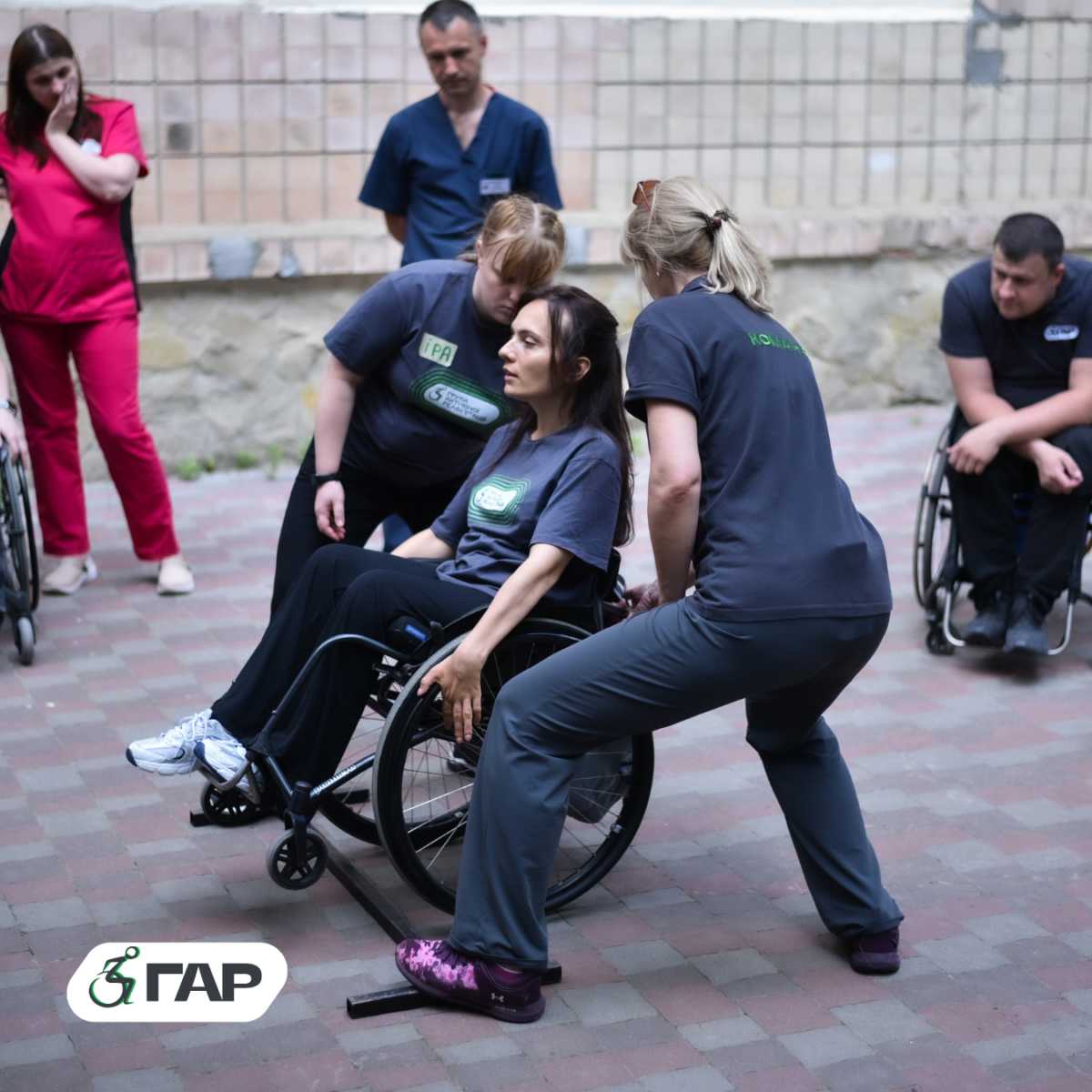
After a spinal cord injury a person spends weeks, sometimes months, in hospital. The facility’s team does its job — saves the life, operates, stabilises the condition, starts rehabilitation. But the question of how to live now is answered by someone’s lived experience rather than by a protocol.
First Contact adds exactly that to the team’s work. Instructors come to the person — they too live with a spinal cord injury and use wheelchairs, only a few years further down the same road. They do not promise that everything will be fine. They show that life goes on: how to transfer, what to do about pressure sores, where to get a wheelchair, how to go back to work.
This is more than lived experience. Every instructor is trained under the GAR programme and works to the organisation’s internal protocols: what a visit covers, how to talk about difficult subjects, where the limits of their competence lie and when a question is handed over to the facility’s specialists.
This does not replace specialists and is not work done instead of the staff. Instructors work within their own competencies, at the request of the facility’s responsible staff and in a format agreed with the team — and they often take on the topics a busy shift simply has no time for.
For the family it is often the first conversation after which fear turns into a plan. For the team it is the practice of living with an injury, straight from the source, which is hard to get from a textbook.
Instructors visit hospitals and rehabilitation centres by arrangement with the facility, and they also come to people’s homes after discharge. Where no instructor is nearby, remote consultation remains. The contact does not end with the visit: active rehabilitation camps and a community of people who have been through the same thing follow.
For the person and their family all of this is free of charge.
- 01 You send a request Using the form at the bottom of this page — for yourself or for someone close to you. We ask for exactly as much personal data as we need to call you back.
- 02 We look into your request We clarify the situation: when the injury happened, where the person is now, what is already known and what is needed most. A conversation, not a questionnaire.
- 03 We send an instructor or arrange a remote consultation If there is an instructor in your region, we arrange a visit — within the resources available. If not, we offer a remote consultation. It depends on the situation and is decided case by case.
- 01 A request from the facility's responsible staff member Using the same form at the bottom of this page. A few lines about your facility and what you expect from working together are enough.
- 02 The programme coordinator gets in touch We review the request and propose a joint meeting with the people responsible for patient care at your facility.
- 03 We agree the format at the meeting Which patients instructors work with and how often, how they cooperate with your team, and which topics stay with your own specialists.
- Instructor visits to your patients — at the request of the facility's responsible staff and in a format agreed with the team.
- Some of the load taken off your staff: instructors cover daily living, wheelchair use and going home — topics a busy shift rarely has time for.
- Practical experience for the team — what protocols do not contain, from a person living with an injury. A complement to your specialists' work, not a substitute for it.
- Clear boundaries: instructors are trained under the GAR programme and work to the organisation's internal protocols, within their own competencies. Clinical decisions stay with your team.
- Materials for patients and families that can be left in the ward.
- A route onwards for your patient after discharge: active rehabilitation camps, remote consultations, community.
Choose who the request comes from and fill in a few fields. We will call you back and agree on the next steps. For the person, support is free of charge.