



Accessibility for business and institutions
Accessibility audits of buildings, spaces and services using an international methodology — plus staff training and support through the changes.
We look at more than the ramp: the route to the entrance, the bathroom, wayfinding, the service desk, the website and the way people are spoken to.
A person with an injury can learn everything — to transfer, to drive, to work, to travel. But if there is a step at the clinic and your shop entrance has two more, those skills lead nowhere. So alongside our work with people we work with the environment.
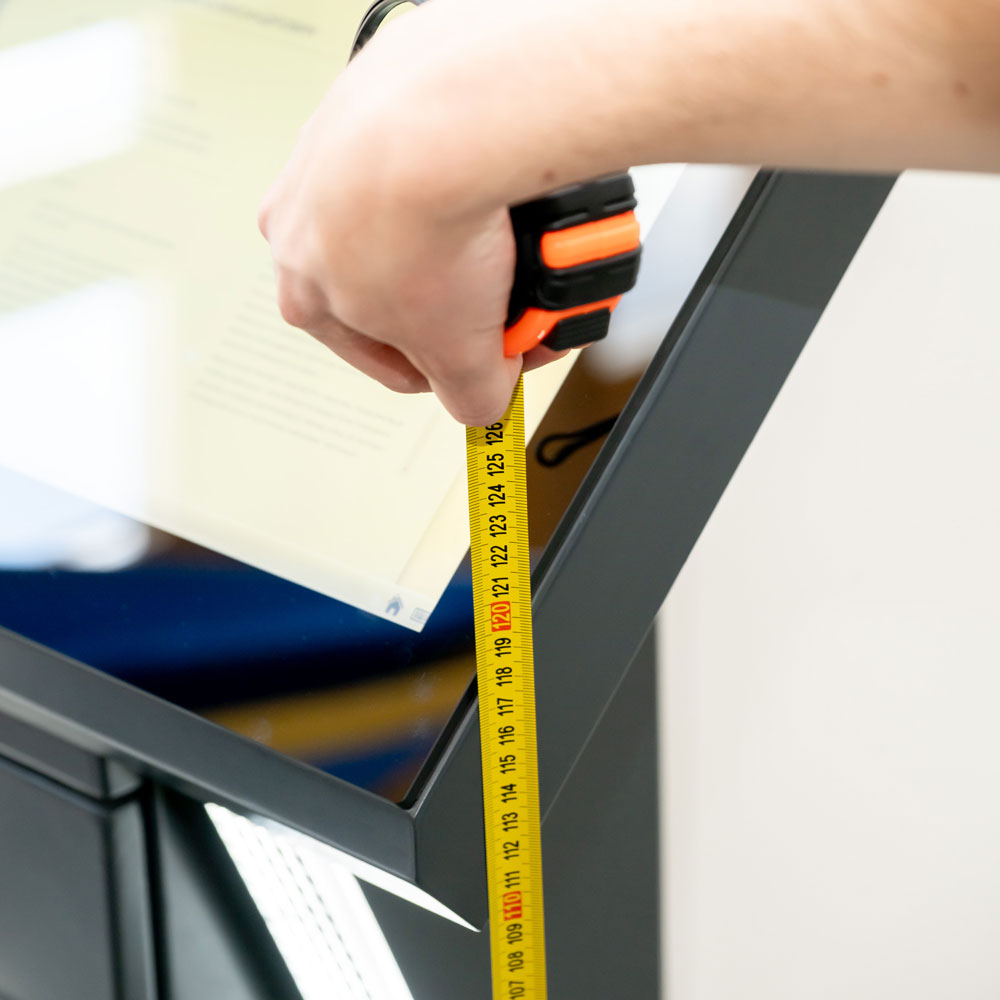
We audit the accessibility of buildings, spaces and services — from a hospital or a university to a café or a community centre — using an international methodology. Part of our team holds international accessibility expert certification obtained in Latvia with the support of Sustento.
An audit is not a list of complaints. It is a list of what to change and how: with measurements, priorities and an estimate of what solutions cost. Along with it we can train your staff, because accessibility is not only a ramp — it is also how your service reaches a person who sees, hears or moves differently.
We assess more than the building: the route to the entrance, the bathroom, wayfinding, the service desk, the website and the way people are spoken to. What you get is not a verdict about a ramp but a clear plan of changes.
For businesses and institutions this is a commercial service — for two reasons.
First, an audit is work that somebody has to cover: the team travelling to the site, transport and accommodation, measurements and photo records on location, and the hours certified specialists spend on the report and the solutions. Scope and price are agreed after a short conversation about the site: auditing a small room and auditing a hospital block are different jobs.
Second, this income is what lets us sustain the programme and work for free where there is no one to pay. Home advice for people after an injury, audits in communities and public facilities within donor-funded projects, training for medical teams — all of it exists partly because businesses pay their share.
- 01 The request Through the form at the bottom of this page: what the site is, its scale, what has already been done and when you plan the changes.
- 02 A conversation about the task We work out what is actually needed: a full audit, a one-off consultation or training for the team.
- 03 The proposal Scope, timing and price. Auditing a small room and auditing a hospital block are different jobs, so the terms differ too.
- 04 Work on site and the report A survey with measurements, a report with priorities and, if needed, staff training and a re-check after the changes.
- For businesses and institutions this is a commercial service: scope and price are agreed after a conversation about the site.
- The price covers the team travelling to the site, transport and accommodation, measurements on location and the hours certified specialists spend on the report.
- This income sustains the programme and pays for the work no one else can fund: home advice for people after an injury, audits in communities, training for medical teams.
- For communities and facilities covered by our projects an audit can be free of charge, when a donor pays for it. Ask whether a programme is currently running in your region.
- For people with spinal cord injuries and their families, advice on their own home is free — that is a separate programme.
- We do not build, design or sell equipment: our part is assessment, recommendations and training.
A few fields so we can gauge the scale. We will then get in touch, clarify the task and send a proposal with scope and price.