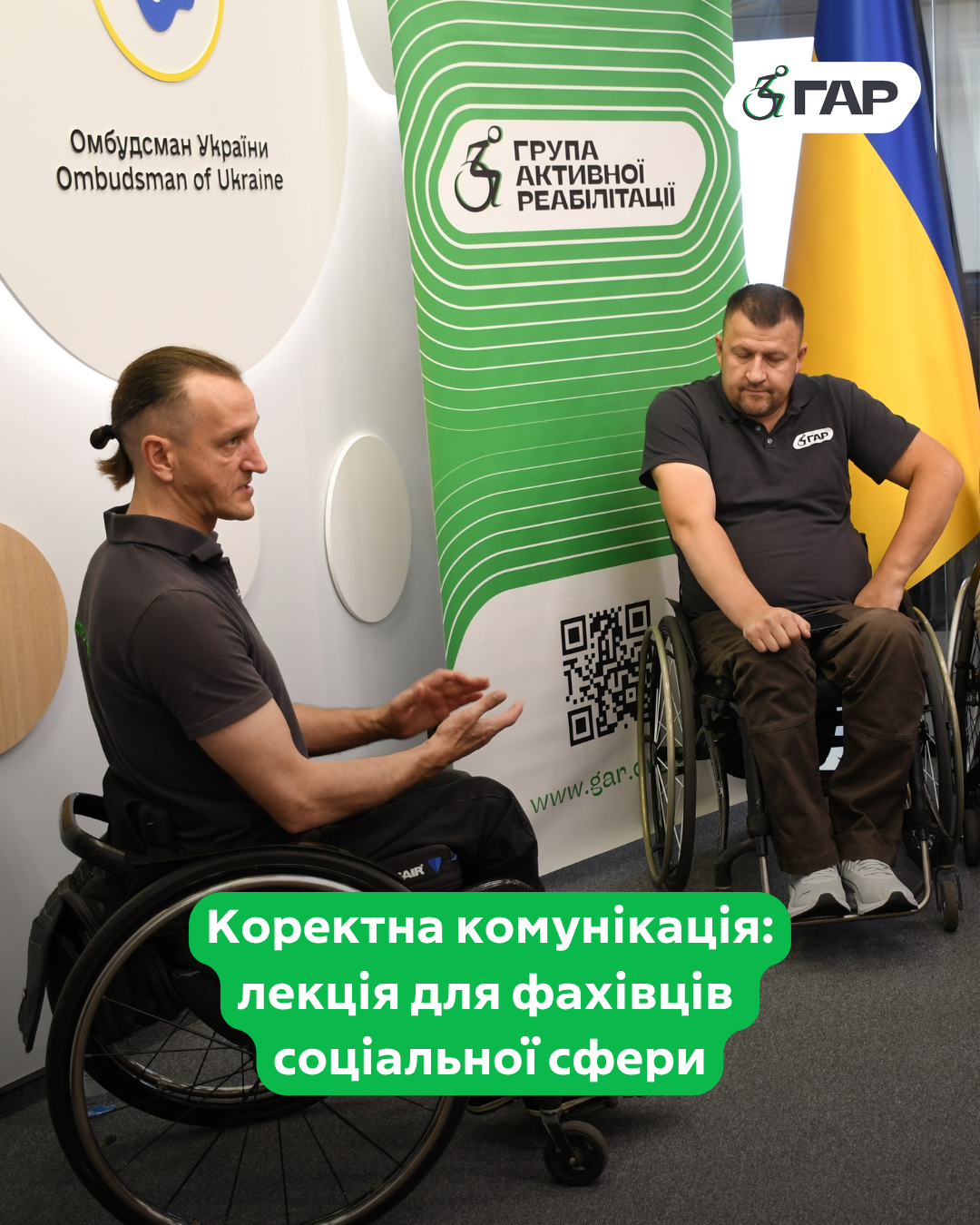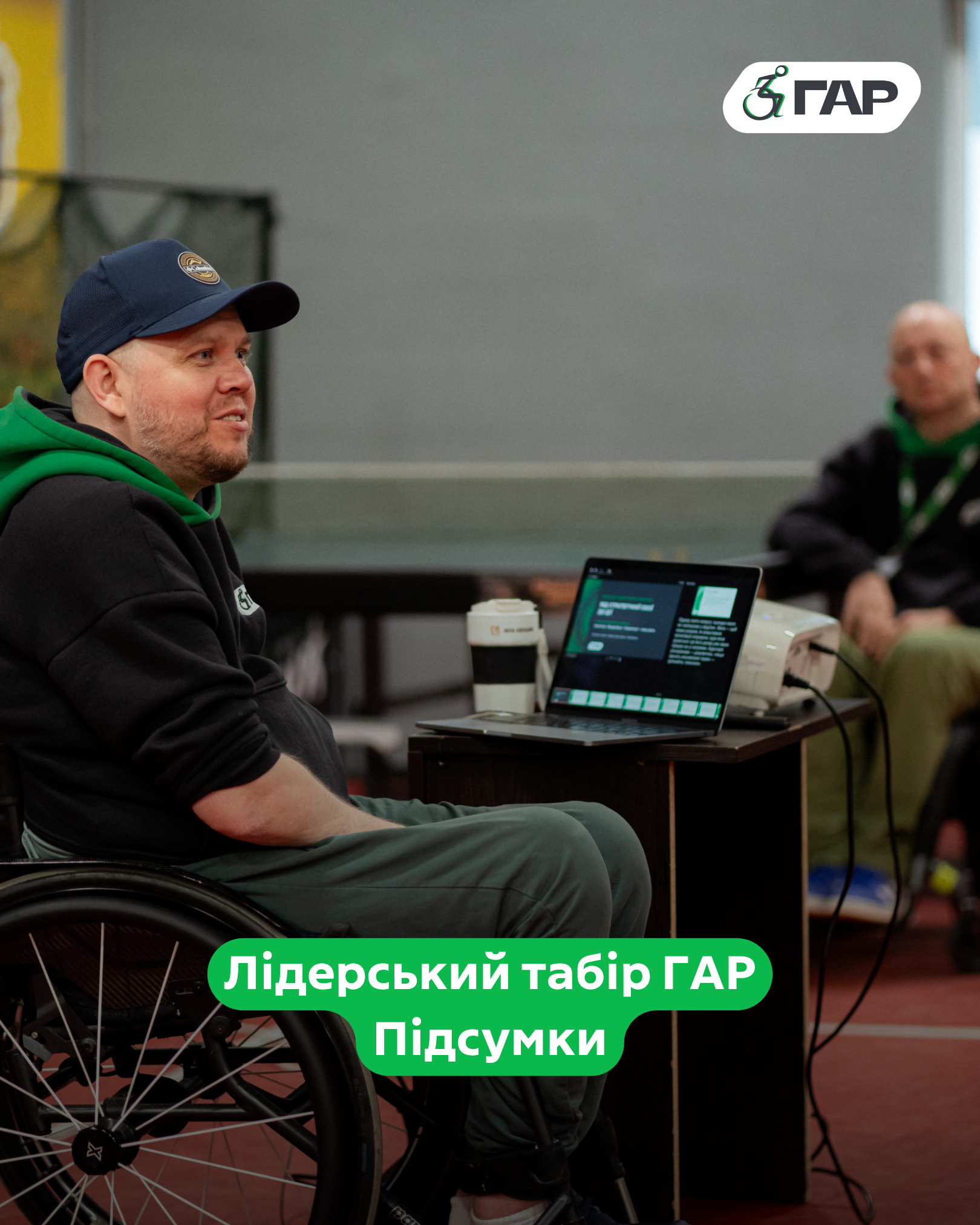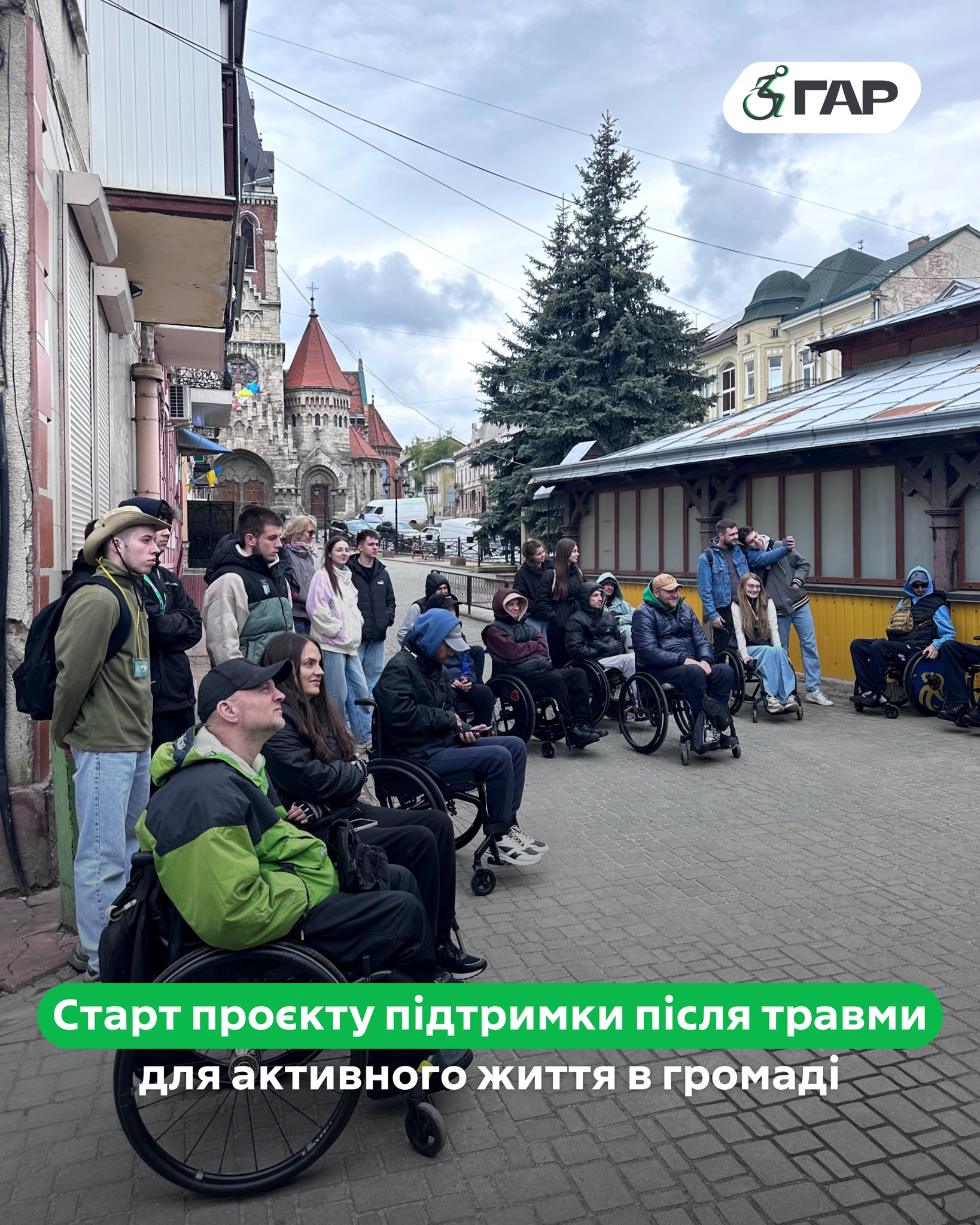


Another «All-Ukrainian 2» active rehabilitation camp has come to an end. Twenty-four participants from every corner of Ukraine went through a ten-day rehabilitation programme designed to make each of them as independent as possible and free from outside help in everyday life. They are people with different levels of spinal cord injury, different physical condition and different time since the injury.


The camp was held, as has become the tradition, at the «Ukraine» National Centre for Paralympic and Deaflympic training and rehabilitation (Yevpatoria), from 6 to 15 September 2013. This camp added to the ranks of AR instructors: Antonina Tsurkan successfully completed her traineeship and earned the title of archery instructor — congratulations to her!
Tetiana Lutsenko took on the role of camp organiser for the first time and handled it brilliantly. Tetiana commented on her work and shared her impressions.
Tetiana Lutsenko, camp organiser
The organiser’s role was new and unfamiliar to me, but with the help of experienced organisers Oleh Kolpakov and Roman Chuikov, the team of instructors and the group of volunteers, we managed, and everything went well. There were problems and unpleasant moments too, among them participants falling ill and the difficult family circumstances of one of the instructors, who had to leave the camp. It should also be said that one of the basic rules of every active rehabilitation camp is a dry law. We warn participants about it before they arrive, and on arrival day everyone signs a document agreeing to follow the camp rules, including the complete ban on alcohol. Two participants broke that rule and were immediately sent home. Moments like that are especially bitter: there are a great many people who spend years hoping to get to a camp, for whom active rehabilitation is the first step towards an independent, full life — and their places are taken by those who disregard our work and our rules. But there is no way to foresee it. In everything else the camp went excellently, for which I am deeply grateful to everyone who worked with us and, of course, to the participants, who pushed past their limits, gained new skills, strove, learned and took an active part in everything we did. I wish everyone good health and hope for further cooperation!
Our participants shared their impressions of the camp as well.
Inna Verro
It all began with an invitation.
— Inna, you absolutely must go there!
Now I understand why that was said. My coach had probably grown tired of watching people help me transfer from my ordinary wheelchair into the fencing one.
Having overcome the fear of «how will I manage anywhere on my own», I began packing according to the list that came with the invitation. Some nine hours in a car, and I arrived at the «Ukraine» centre.
Smiling people met me, and I plunged into the world of independent living. The first three or four days were very hard. I kept sliding off things, falling, and needing help very often. I could not see how you could do everything yourself and not ask for help even once in a whole day. It turns out you can. First of all thanks to an adapted space and accessible architecture, and of course to the skills that the people around me helped me build: the instructors, the young people from the service team, and the participants themselves. My instructor Inna followed me around like a mother, showed me ten times over what to do and how, and answered silly questions with patience and understanding. She is an amazing person and has become my example. Now I know exactly the kind of person I want to be!
The service team. This needs explaining, because to an outsider it is not at all clear who they are. They are young men and women — volunteers who assist the camp participants. Cheerful people, always ready to catch a beginner falling out of a wheelchair (like me) and always ready to spot you. Very interesting people, quite young but very determined.
The tight schedule of training, lectures and other fixed points left no time for self-pity, let alone boredom. But there was time to talk. The excellent rules announced at the start of the camp gave us, the participants, a chance to get to know each other. At breakfast, lunch and dinner you had to sit at a different table each time, with new people. And so, casually devouring what the cooks had made for us, we chattered about all sorts of things. Another rule: everyone addressed each other informally — those who were 18 and those who were 50 alike. There is something in that, I must say. Talking was easy. It is a great pity that those ten days flew by so fast; I would like every minute back.
The lectures. A journey into the world of pressure sores and conversations about other specific matters were very useful. It is a shame that only a year and a half after my injury did I learn what a spinal cord injury is and how to live with it.
The training. I could never have imagined that one day I would get into a swimming pool! That I would get in by myself, that I would swim 25 metres faster than a man from my group. Oh, that taste of victory! It sounds grand, but the joy of such small victories is inspiring. It was fascinating to hold a bow and hit the target. To hear the sound of a shot done properly — believe me, that is something! It turned out I had not forgotten how to hold a table tennis racket, and that I can cover 2,600 metres in a wheelchair without dropping dead. We were already joking among ourselves that we are not people with limited abilities, we are people with unlimited abilities! In wheelchair skills we were taught to handle different terrain; in physical training they showed us how to exercise at home. I did not reach great heights, but now not every threshold is a barrier to me, and a five-centimetre crack in the asphalt will no longer leave me stranded as it used to.
They gave me a book to take home, which my husband is reading now and sharing with me; he has come to understand me better, and to understand what we should do next.
I left with a great deal of knowledge and got answers to all my questions. GAR, thank you! I miss you already.

Dmytro Andrushchenko
I have a compression fracture of the C4–C5 cervical vertebrae, weak movement in my arms, and I need help with daily care. I want to share my impressions of this camp.
It was my first time at rehabilitation like this. I will try to convey what I felt and what I managed to learn and achieve in ten days.
From the very first day participants find themselves in a completely different world — a world of real movement and of goodwill from the instructors and volunteers. The schedule is very tight, with the disciplines timetabled for every day. The morning starts at seven, breakfast at eight, then two sessions in a row with a thirty-minute break, then lunch and two hours of rest, then another training session, after which there is personal time and a shower, then dinner, and at 20:00 a lecture (a discussion) that lasts an hour and a half, and lights out at 23:00. That is the routine at an active rehabilitation camp.
The lectures covered such important topics as:
- the prevention of pressure sores;
- self-care (here a participant with a spinal and cervical injury demonstrated how to undress and dress completely) — a big step towards independence; the important question of hygiene was covered too;
- law: the rights of people with disabilities explained clearly, including the difference between the notorious categories «A» and «B»;
- active-type wheelchairs: what kinds there are and what part they play in your life;
- the history of the active rehabilitation movement in Ukraine;
- a lecture on sex, which covered the difficulties and the ways to deal with them in detail, and the fact that the life of a person in a wheelchair should be full and rich.
Besides the lectures there were team games and contests that let us get to know each other better and become friends — and most importantly, everything happens as a group: there is no room here for loneliness or sadness, only positive emotions. There were also two discos, where you let go completely and give in to the general mood; words alone cannot convey it.
The pace of life is so fast that by the third day you lose track of time: you forget not only the date but the day of the week, and only come back to yourself at the end of the camp, when it is time to leave.
I would like to say more about the training.
Wheelchair skills
We were taught to handle active wheelchairs properly: to get over obstacles such as kerbs, rails and steps, using a handrail or with someone’s help. None of it is possible without being able to hold a balance — that is the single most important skill for getting over obstacles. We were taught how to fall properly and how to get back into the chair from the floor unaided. All participants also took the Cooper test, which measures how well the body copes with physical load; it is worth noting that absolutely everyone improved their result, some by a factor of two — and I was among them!
Archery
I simply could not see how a person with a cervical injury could shoot a bow! It turns out you can: there is a special glove with a hook that draws the string, and the bow itself is strapped to your arm with an elastic bandage. For those with working hands there is no problem at all. Surprisingly and unexpectedly, I hit the target. Not without help, of course, but I hit it — and for me that is an enormous leap.
Swimming
We were taught to stay afloat, shown the swimming styles used by people with disabilities and breathing exercises, and — most importantly — many participants had their fear of water beaten out of them; in the final session there was a timed swim. Volunteers spot us throughout the training in the pool, so the session is safe. I loved the feeling of freedom in the water: the body becomes weightless, it relaxes, the spasticity disappears, and the muscles start working fully. Realising that you can swim already makes you give it everything you have.
Table tennis
I had played this sport before, so I concentrated on training. We were given a short tour of its history and taught the basic serves and correct play. On the last day of the camp there was a table tennis tournament among the participants.
General physical training
The basics of physical training include visits to several gyms and specialised halls, where sessions were held and we were shown how to exercise properly, how to look after your body and how to distribute the load. Physical exercise for a person with a spinal cord injury is the foundation of health, and its importance is hard to overstate.
Besides the main disciplines, all participants visited the sports and fitness complex. There we were told about the games Paralympians play — rugby, basketball, boccia. I got to take part in boccia: until I worked out the rules nothing made sense, and then real excitement and a thirst for winning took over. All in all, time in that hall flew by and nobody wanted to leave.
I almost forgot the marathon: only the most enduring and strong-willed made it through. Not everyone managed the 12 laps, but many participants and instructors completed that hard route.
During the camp I gained unique experience, knowledge and skills that I will use in everyday life — and most importantly, I found many friends who will always listen and support me with advice. Thank you all very much!
I am sincerely grateful to everyone for the knowledge and the positive energy. I wish you all the best of luck, and I hope we will meet again.
Until next time, FRIENDS!
Dmytro Chernykh