

Katya Burych has been volunteering at AGR for over 9 years. In 2015, at one of the camps, she met her future husband, and today they are raising two sons – Svyatoslav and Nikita. Before the war, Katya lived with her family in Irpin. And now her life, like the life of all Ukrainians, is divided into BEFORE and AFTER.

“The worst moment came in the evening, when I sealed the windows and made dog tags for my loved ones. I put them on everyone’s neck. There was information about us and close relatives, address, contacts in case of the worst case scenario”
Katya Burych

On February 23, my husband called me and said that there would be a war tomorrow. His acquaintances assured him of this, but I did not believe it and laughed. And the next day I woke up from the call of my godmother, who said that they were being bombed in the Dnipro. Honestly, I didn’t believe until recently that in the XXI century, when there are advanced technologies and diplomacy, war is possible…
On February 24, my family and I woke up quickly. In the morning my husband went to work, and I stayed at home with the children. During the day I picked up the documents, medicines, snacks, and bought diapers for the youngest son. It was very scary for the children, although there was no panic. Just waiting for my husband. We thought about evacuation, but on the first day we decided not to go because we didn’t understand which region was safe.
How did you talk to the children about the war?
From the first day of the war, my friend, an anti-terrorist operation fighter, told us to take the children and go to his village. But because of fear of the roads we stayed at home in the bathroom for two days. The children got fussy, because they wanted a normal life. Walking on the street, watching cartoons…
My sons heard planes and explosions, so I told them not to go to the windows and explained why. I also said openly that we might have to leave the house. Three days after the start of the war, it was a difficult night as the russian occupiers threw a shell into the Irpin bridge and destroyed it. He was just near our house. We woke up in the morning to walk the dog, heard explosions again and told each other that we had to go to save the lives of the children.
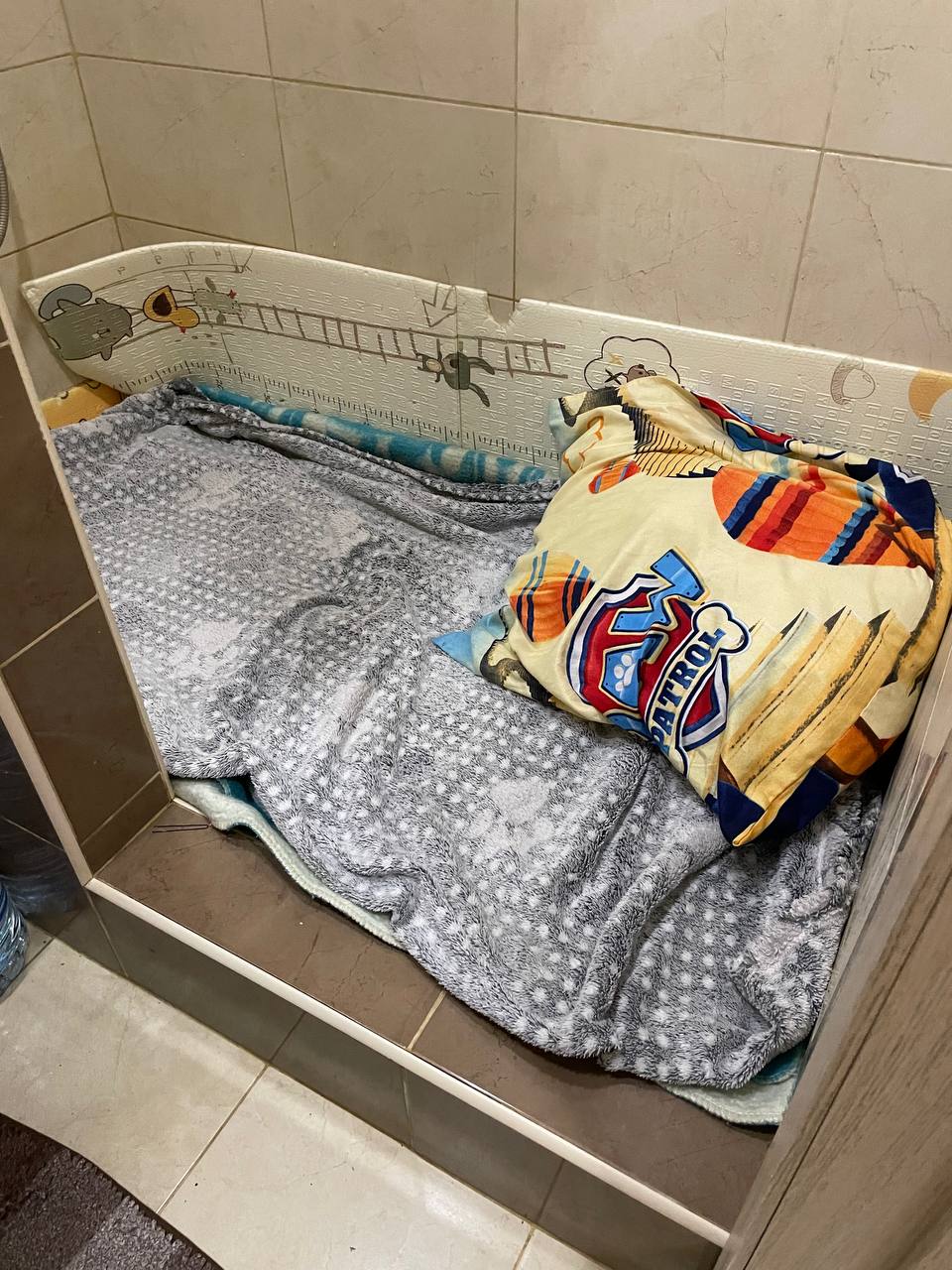
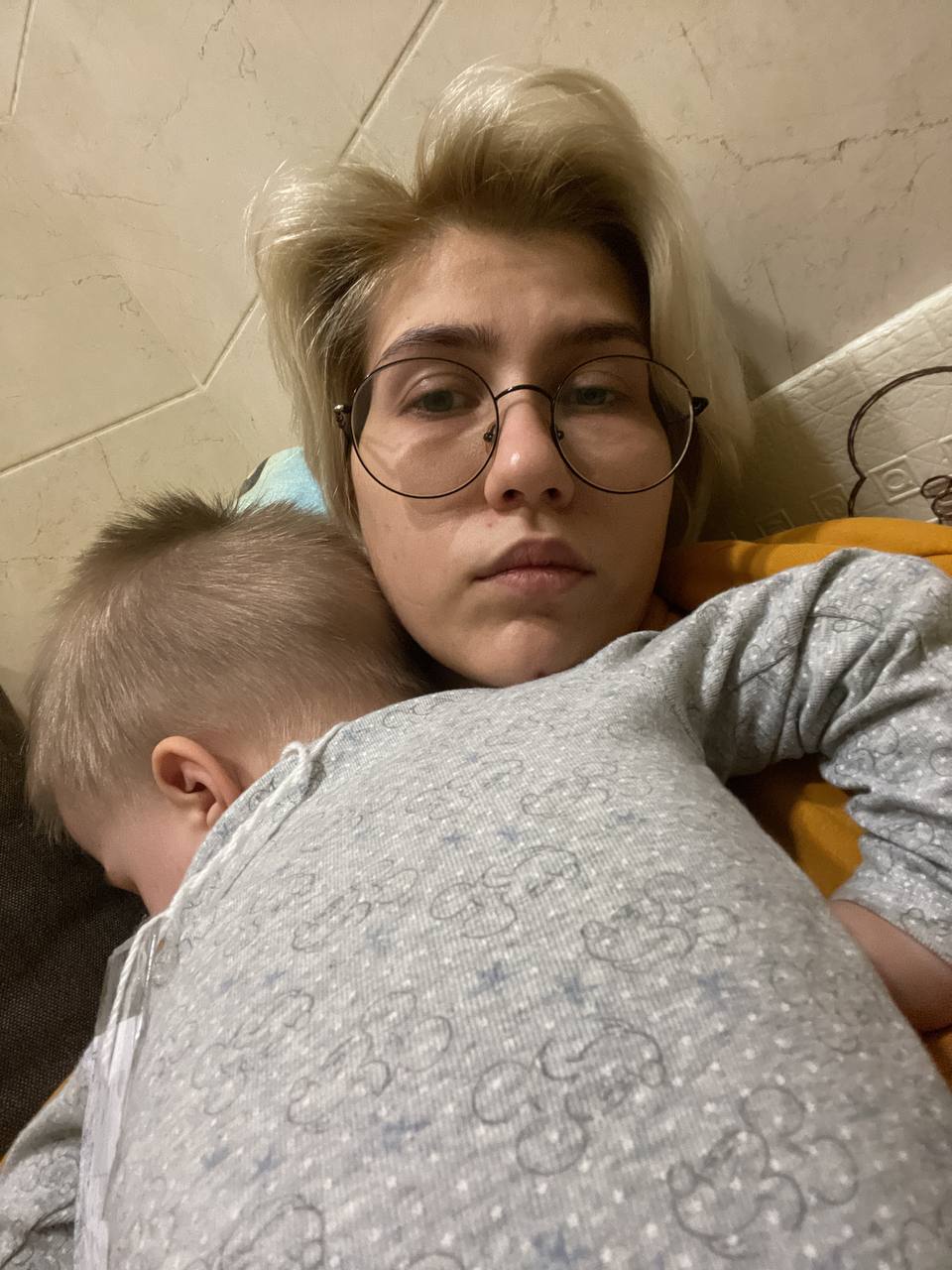 Life AFTER: arranged bath for children during the war
About departure from Irpin
My husband and I decided to evacuate together with the neighbors, because it was scary alone. We packed up in 10 minutes, took the maximum of warm things for children, food, medicine, and two toys. It was very scary to go by car, especially when we went to the bridge.
It was very scary when our acquaintances wrote to us that there was a shooting at the place where we had driven. I understand that if we’d wasted time packing up more things at home, we may not be alive anymore. So I do not regret that we actually went with nothing.
Our first destination was Khmelnyk, where my godfather booked a place. We spent two days there to recover from stress. Then we went to my friend’s grandparents in the Ternopil region. We lived there for about a week, but decided to move on because the housing was not available to Artem, my husband. There was also a very bad internet connection, and I needed at least the Internet to work in GAR.
About volunteering during the war
Our last destination was a village in the Ivano-Frankivsk region. My husband’s friend Igor Kipeschuk lives there. He hosted us at his house and gave me a computer. We, in turn, help his grandmother. The house is affordable, that means fully adapted to the life of a person who moves with a wheelchair – which is a key point for our family.
With the outbreak of war the leaders of “Active rehabilitation group” GAR have established a focal point where people with spinal cord injuries can fill out a questionnaire. We provide this category of people mainly with incontinence products to reduce the negative consequences and humanitarian catastrophe. Our team has already processed over 400 requests! We direct humanitarian aid according to the people’s needs. We consult people and help with moving to other regions and abroad.
I communicate with people with spinal cord injuries and even more, because we receive a lot of requests. My responsibility is to collect and transfer useful contacts, I am looking for volunteer organizations, directing food and medicine. I also work closely with Mykola Makar. He leads the hub in Ivano-Frankivsk, which was established by the GAR, where humanitarian aid from our partners from Poland, Sweden and the Czech Republic is directed. I pass him requests from all over the region, and he sends packages from the hub.
Our team is very flexible and can adapt to any conditions. During the pandemic, we also quickly came together and began to adapt our programs to reality, holding webinars and active online rehabilitation courses. Moreover, we all pay attention to the individual situation of each of us. For example, a team always asks me if I have too much workload, if I have enough time for children, and so on. It fills me and gives strength, because there are people by my side who work every day for a common goal.

How does Irpin live during the month of war?
Everything is difficult with Irpin now. It remains a shield for Kyiv and holds back the Russian occupiers. We don’t know for sure what happened to our house. Honestly, I have already let go taking into account that there was everything for life, housing, things, work. Just thank you for being alive.
Even if the war ends soon, my family and I will not be able to come back, because the city’s infrastructure in Irpin is completely destroyed. And for my husband, accessibility on a wheelchair and car is extremely important. So while we are thinking about what to do next.
P.S. On March 28, 2022, the mayor of Irpin announced that the city had been liberated from the occupiers!