


Together Toward Independence: Comprehensive Support for People with Disabilities During the War
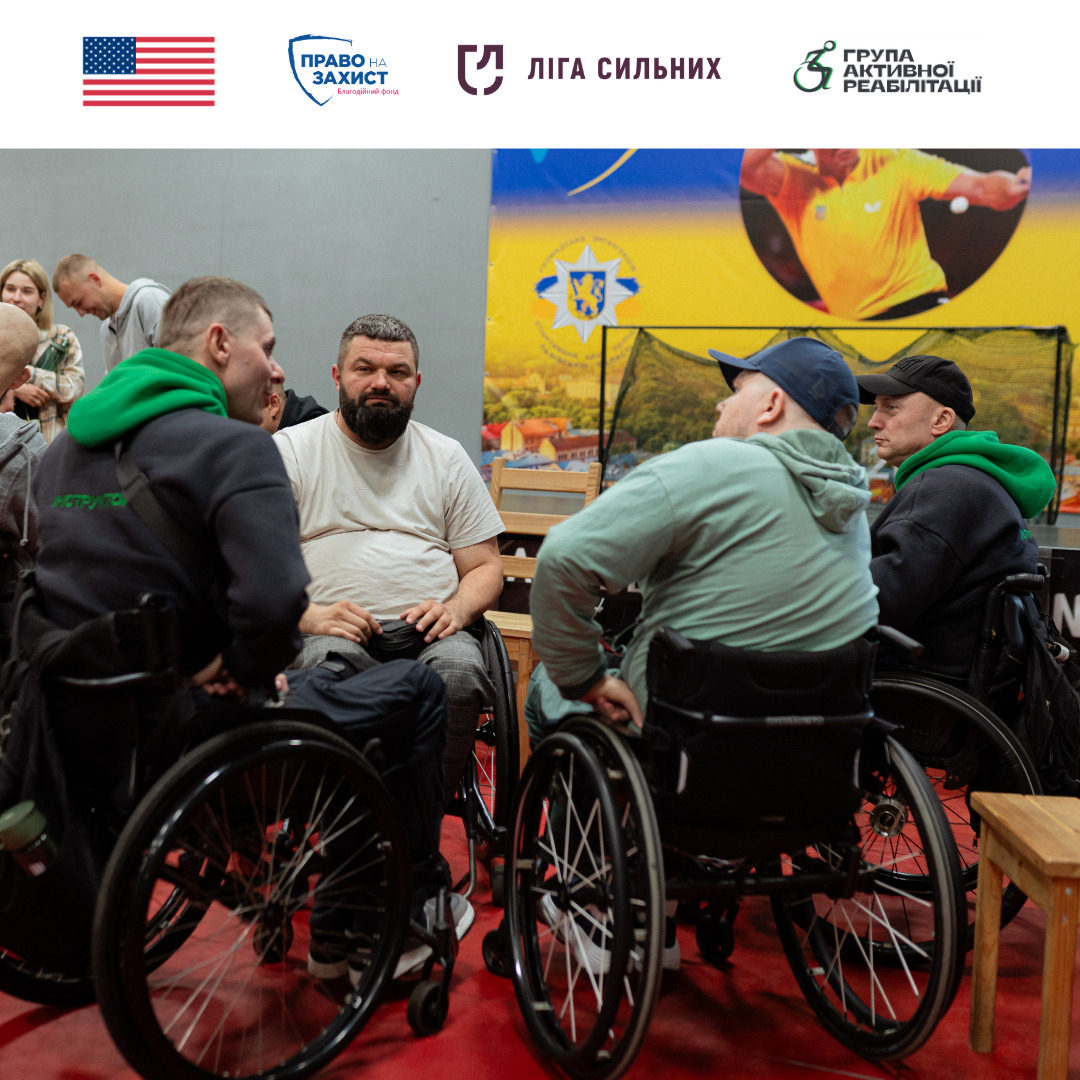
“Together Toward Independence” is a project supporting people with disabilities, primarily people with spinal cord injury, in five regions of Ukraine. It is not a one-off consultation but ongoing support: a case manager guides each person from the first contact to a concrete result, such as completed paperwork, a wheelchair received, or the ability to leave home again. Over six months, at least 450 people will receive assistance.
About the project
The war has made visible what already existed. A person with a disability who needs a certificate, rehabilitation or an assistive device often faces not a lack of services but the impossibility of reaching them: an office on the second floor with no lift, an application in tiny print, a requirement to appear in person — and not just once. Displacement, destroyed infrastructure and a growing number of people with newly acquired injuries have made this distance even longer.
“Together Toward Independence” shortens this distance. We work not with a document but with a person and their situation — and at the same time with the barriers in communities themselves, so that the next person does not have to travel the same road.
What we do
Individual support and navigation
After a person reaches out, a case manager works with them: together they identify what exactly is needed, draw up an action plan and follow it step by step — from booking a commission appointment to getting the result. Support lasts as long as it is needed, not just until the end of a consultation.
Psychosocial support
Individual sessions with a psychologist — online, at a time that suits you. Support is available not only to people with disabilities but also to those who care for them: the exhaustion of family and close ones is a separate issue that is rarely spoken about openly.
Mobility consulting and legal assistance
Mobility consultants — people who are wheelchair users themselves — help with choosing and adjusting assistive devices, developing independent mobility skills and organising daily life. A legal adviser provides advice on disability, social benefits, internally displaced person (IDP) status and access to services. Both services are provided remotely, so they are available in all five regions.
Joint mapping of barriers in communities
Together with community representatives, local authorities and institutions, we walk real routes — from the bus stop to the office door — and record exactly where the route breaks down. The result is not a report on “accessibility in general” but a list of specific points with solutions. Many of these barriers can be removed without a budget: moving appointments to the ground floor, changing opening hours, adding a sign.
Accessible navigation
Information on where to go and what is needed is prepared in clear, accessible formats — so that it can also be used by those who do not have a case manager at their side.
Who it is for
- People with spinal cord injury and other people with disabilities.
- People who acquired a disability as a result of the war, including civilians.
- Internally displaced people with disabilities.
- Family and close ones, including people who provide care.
- Professionals and community representatives working on accessibility.
Location and timeline
The project covers five regions of Ukraine and runs from 1 July to 31 December 2026.
How to get in touch
Call the consultation line at +38 (093) 112-94-16 or write to us, and a support specialist will contact you. You do not need to explain everything at once: it is enough to say what you are having difficulty with.
Who supports us
The project is implemented by the NGO “All-Ukrainian Association of Persons with Disabilities ‘Group of Active Rehabilitation’” with the support of the public association “League of the Strong”, as part of a project implemented by the Charitable Foundation “Right to Protection” with financial support from the Government of the United States of America.
The public association “League of the Strong” is responsible for the content, which does not necessarily reflect the views of the Government of the United States of America.